RCMC Exemption for Exports Up to ₹3 Lakh: What Exporters Need to Know
India has introduced a significant RCMC exemption for exports to simplify compliance for small-value exporters. On 15 September 2026, the Directorate General of Foreign Trade (DGFT) issued Notification No. 36/2026-27 and amended Para 2.57 of the Foreign Trade Policy (FTP) 2023. Under the new rule, eligible export consignments with a Free-on-Board (FOB) value of up to ₹3,00,000 are exempt from the Registration-cum-Membership Certificate (RCMC) or Certificate of Registration requirement, wherever such certification would otherwise be required.
This ₹3 lakh export exemption can benefit MSMEs, artisans, first-time exporters and e-commerce sellers. Eligible low-value shipments can be exported without obtaining an RCMC specifically for that consignment. However, the exemption is limited to the RCMC requirement and does not remove other applicable export requirements, including IEC, customs documentation, product-specific permissions and destination-country regulations.
Quick Answer: Do I Need an RCMC for an Export Under ₹3 Lakh?
No, an RCMC is not required for an eligible export consignment with an FOB value of up to ₹3 lakh where the RCMC or Certificate of Registration requirement would otherwise apply under FTP Para 2.57. The RCMC exemption for exports took effect from 15 September 2026.
If the FOB value of an individual export consignment exceeds ₹3 lakh, the applicable RCMC or Certificate of Registration requirement continues to apply wherever required under the Foreign Trade Policy.
Is the ₹3 Lakh Limit Per Consignment?
Yes. The ₹3 lakh RCMC exemption applies on a per-consignment basis, based on the FOB value of the individual export shipment. It is not an annual turnover exemption.
What Exactly Changed in September 2026?
DGFT inserted a new sub-paragraph (c) into Para 2.57 of FTP 2023. The new provision creates a de minimis exemption from RCMC / Certificate of Registration for export consignments with FOB value not exceeding ₹3,00,000.
Government reporting around the change said the measure is intended to reduce compliance for new and small exporters and facilitate postal, courier and other emerging export channels. It also cited five-year data showing that consignments up to USD 3,000 represented 43% of shipping bills but only 0.86% of India’s merchandise export value. Those figures describe the policy rationale; they should not be confused with the separate ₹3 lakh legal threshold in the notification.
The RCMC exemption for exports was introduced to simplify compliance for eligible low-value export consignments.
This change is separate from the ₹10 lakh courier export value limit change introduced earlier in 2026.
What Is an RCMC?
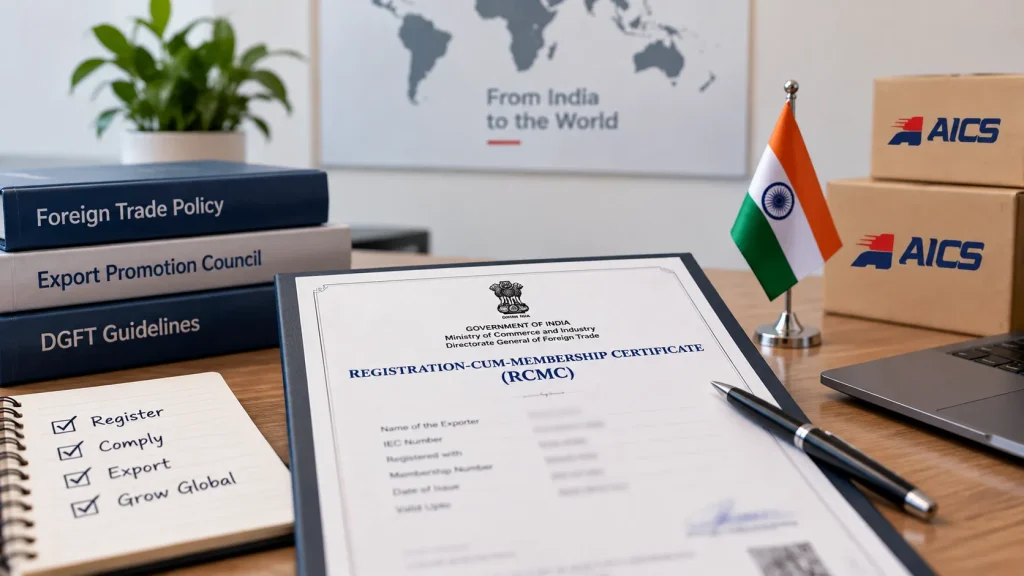
RCMC stands for Registration-cum-Membership Certificate. Under the Foreign Trade Policy framework, exporters may need an RCMC from the relevant Export Promotion Council, Commodity Board or other designated registering authority when seeking specified authorisations, benefits or concessions, depending on the applicable policy route.
The September 2026 amendment does not abolish RCMC. It creates a limited exemption for qualifying low-value consignments. Exporters whose consignments exceed the threshold, or whose circumstances otherwise require registration, should continue to check the appropriate registering authority and current policy.
Who Benefits Most from the ₹3 Lakh Exemption?
For small exporters, the RCMC exemption for exports can reduce the documentation burden for eligible consignments. MSMEs and artisans can use smaller shipments to validate demand before scaling. D2C and e-commerce sellers can send eligible low-value commercial consignments through courier or other channels with one less upfront compliance step. Occasional exporters may also benefit where a one-off consignment falls within the threshold.
This is especially relevant to businesses shipping samples, small commercial orders, limited production runs or early international orders. The exemption reduces one registration hurdle; it does not remove the need to classify the product correctly or prepare the shipment properly.
The ₹3 Lakh Test Is Based on FOB Value — Not Turnover
FOB value is the value of the export goods on a Free-on-Board basis for the consignment. For this exemption, the notified threshold applies to the FOB value of an individual export consignment.
Example: if a qualifying export consignment has an FOB value of ₹2.40 lakh, the RCMC / Certificate of Registration exemption can apply. If another consignment has an FOB value of ₹3.25 lakh, it crosses the threshold; the exporter must check and hold the applicable certificate where FTP requires it. Do not split or structure shipments artificially to avoid compliance requirements; use genuine commercial documentation and obtain professional advice where needed.
Does the RCMC Exemption Mean I Do Not Need an IEC?
No. The RCMC exemption is not an IEC exemption. An Importer Exporter Code is a separate identifier under India’s foreign-trade framework, subject to its own rules and exemptions. Exporters should check whether an IEC is required for their transaction rather than assuming the new RCMC rule removes it.
This distinction matters because many search queries use “export registration” as if it were one document. In practice, IEC, RCMC, customs declarations, product permissions and destination requirements are different layers.
Does It Apply to Courier and E-commerce Exports?
Yes, the policy change is particularly relevant to small-value exports through postal, courier, e-commerce and other emerging channels.The RCMC exemption for exports may also be relevant when eligible goods are shipped through permitted courier export channels.
The product must still be exportable, the declaration and documents must be correct, and the shipment must satisfy customs, airline/courier and destination-country requirements. AICS should therefore verify the actual commodity, destination, value, weight and documentation before booking.
AICS provides international courier services from India for businesses and individuals shipping eligible goods overseas.
How This Rule Differs from the ₹10 Lakh Courier-Export Change
These are two different 2026 policy changes. From 1 April 2026, DGFT removed the earlier ₹10 lakh per-consignment value ceiling for exports through courier service under Para 9.05 of FTP 2023. That change concerns the value limit for using the courier export channel.
The September 2026 change concerns RCMC / Certificate of Registration requirements under Para 2.57 for consignments up to ₹3 lakh FOB. An exporter should not combine the two rules into a single threshold. A high-value courier export may now be possible without the old ₹10 lakh courier ceiling, but RCMC and other compliance requirements can still apply depending on the shipment.
What the ₹3 Lakh RCMC Exemption Does Not Remove
Exporters should still verify the export policy for the product and its ITC(HS) classification; customs declaration and documentation; IEC applicability; product-specific licences, NOCs or certificates; dangerous-goods or airline restrictions; destination-country import rules; valuation and commercial-invoice accuracy; and any tax, banking or export-proceeds obligations relevant to the transaction.
The safest reading is: one certificate requirement has been relaxed for eligible low-value consignments. The rest of the export-compliance stack still needs to be checked.
For a first export or a shipment close to the ₹3 lakh threshold, share the commercial invoice and product details before booking. That gives the team enough context to flag documentation or routing questions early.
Regulatory eligibility should always be confirmed against current government rules and, where necessary, with the relevant customs, DGFT, Export Promotion Council or professional adviser.
Exporters should also verify restricted items for international courier, product-specific permissions and destination-country requirements before dispatch.
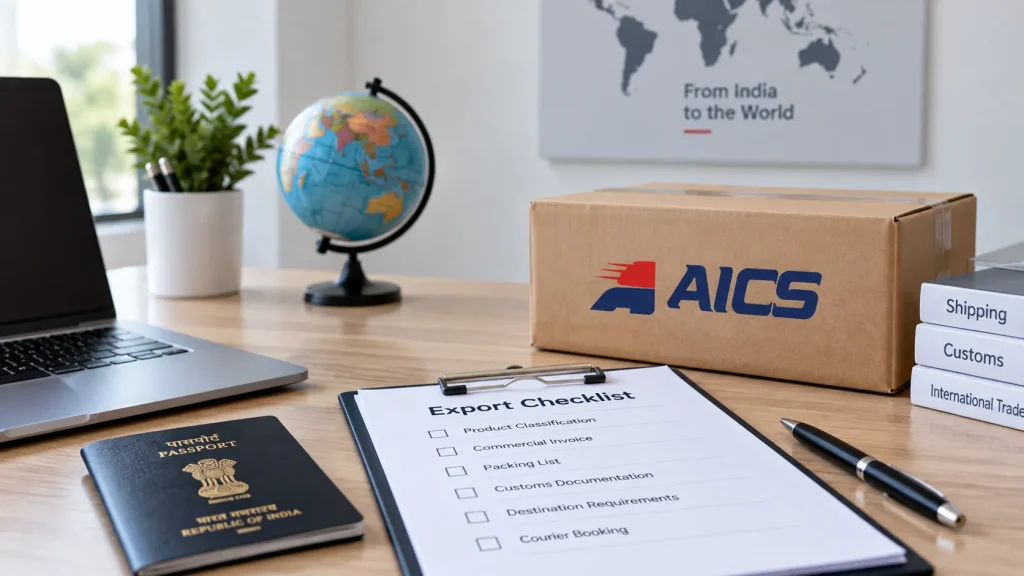
Practical Checklist Before Sending a Low-Value Export by Courier
- Confirm the product is exportable and identify the correct commodity classification.
- Confirm the true FOB value of the individual consignment and whether it is at or below ₹3 lakh.
- Check IEC applicability and any product-specific registration, licence or NOC.
- Prepare an accurate commercial invoice, packing details and other shipment documents.
- Check destination-country restrictions, duties/taxes and consignee requirements.
- Confirm courier acceptance, packaging standards and any dangerous-goods restrictions.
- Keep documentary evidence supporting the declared FOB value and the shipment details.
- If the consignment exceeds ₹3 lakh FOB, confirm whether a valid RCMC / Certificate of Registration is required before dispatch.
For businesses requiring documentation and shipment support, AICS provides export shipment services from India.
Frequently Asked Questions (FAQs)
From 15 September 2026, an export consignment with FOB value up to ₹3,00,000 is exempt from the RCMC or Certificate of Registration requirement where such a certificate would otherwise be required under FTP 2023.
It is per export consignment, based on the consignment’s FOB value. It is not an annual turnover threshold.
For consignments above ₹3 lakh FOB, a valid RCMC or Certificate of Registration continues to be required wherever the Foreign Trade Policy otherwise requires it.
No. The notified exemption is framed for export consignments generally, while the government has specifically highlighted postal, courier and other emerging channels as beneficiaries.
The RCMC exemption does not automatically exempt an exporter from IEC requirements. IEC is a separate compliance item and should be checked independently.
No. Product export policy, customs rules, restricted/prohibited goods controls, destination-country rules and product-specific approvals can still apply.
Yes. A separate DGFT amendment removed the prescribed ₹10 lakh per-consignment value limit for courier exports from 1 April 2026. That rule is separate from the September 2026 RCMC exemption.
Conclusion
The new ₹3 lakh RCMC exemption is a practical entry-point reform for small exporters, but it is not a blanket waiver of export compliance. Treat it as one less registration step for an eligible low-value consignment, then verify the remaining product, customs, courier and destination requirements before dispatch.
If you are preparing a commercial shipment from India, send AICS the destination, product description, invoice value, weight and dimensions for a shipment-specific routing and documentation check.