Introduction
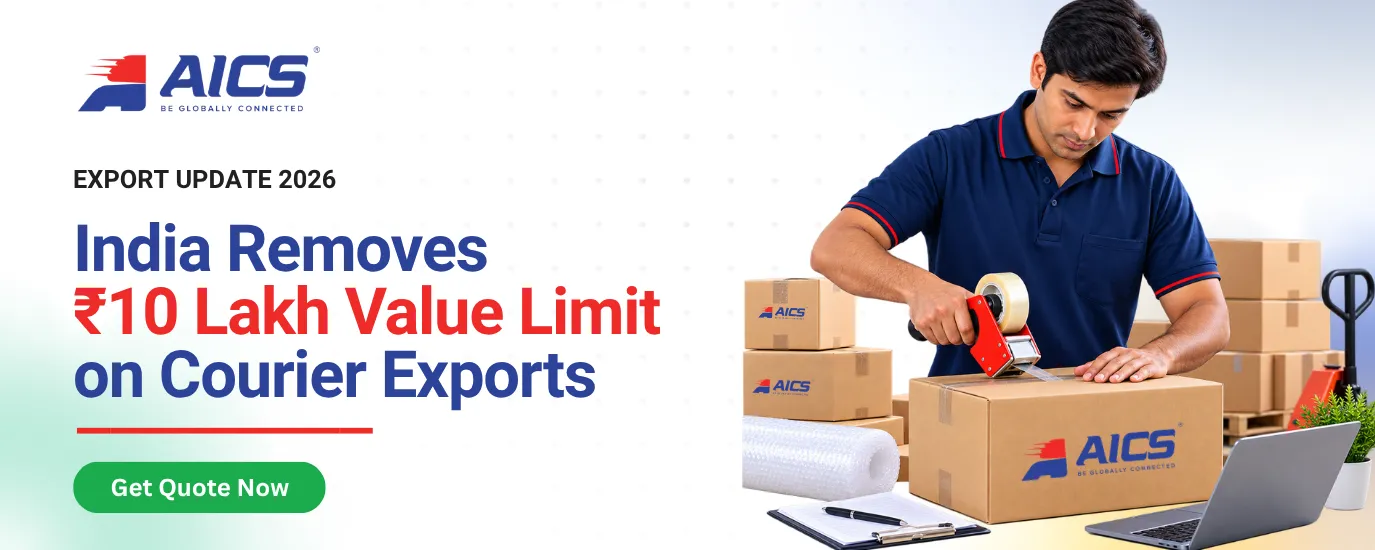
Courier exports from India became more flexible in 2026 after the Directorate General of Foreign Trade (DGFT) amended Para 9.05 of the Foreign Trade Policy 2023 and removed the earlier ₹10 lakh per-consignment value ceiling for exports through courier service. The amendment took effect on 1 April 2026.
For MSMEs, D2C brands, e-commerce sellers and commercial exporters, this change can make courier mode relevant for a wider range of international orders, including consignments whose value would previously have exceeded the prescribed ceiling.
However, the removal of the value limit does not mean that every product can be exported by courier without further checks. Exportability continues to be governed by the Foreign Trade Policy and ITC (HS), while customs, courier, destination-country and carrier requirements may also apply.
The key question for exporters is therefore not only whether the old ₹10 lakh cap has been removed, but whether the specific shipment is eligible, properly documented and suitable for courier export.
Quick Answer: Is the ₹10 Lakh Courier Export Limit Still Applicable?
No. From 1 April 2026, there is no prescribed per-consignment value limit for exports through courier service under Para 9.05 of FTP 2023. The earlier ₹10 lakh ceiling was withdrawn through DGFT Notification No. 67/2025-26 dated 27 March 2026.
However, exporters must still check whether the product is exportable under the applicable policy and classification. Customs, courier, destination-country and service requirements continue to apply, so the removal of the value ceiling should not be treated as blanket permission to export every product through courier.

What Exactly Changed on 1 April 2026?
Before the amendment, Para 9.05 stated that the value limit for exports through courier service was ₹10,00,000 per consignment. DGFT replaced that sentence with language stating that there shall be no value limit prescribed per consignment for exports through courier service.
This is a narrow but commercially meaningful change. It removes a policy ceiling that could force a higher-value consignment away from courier mode purely because of its declared value. It does not remove the rest of the export-control framework.
For an exporter, the correct interpretation is: value alone is no longer the prescribed barrier under this paragraph, but the shipment must still satisfy the rules that apply to the commodity, exporter, customs process, destination and selected service.
Why This Matters for MSMEs and E-commerce Exporters
Courier mode is especially relevant when an exporter is moving smaller consignments, samples, direct-to-customer orders, replacement goods or time-sensitive commercial parcels. Removing the prescribed value ceiling can give growing businesses more flexibility when an order is compact in size but higher in value.
A jewellery accessory brand, specialist engineering supplier, premium textile seller or electronics component exporter may have orders whose invoice value rises faster than the physical size of the parcel. Under the revised policy, the old ₹10 lakh ceiling itself is no longer the deciding factor.
The change can also reduce the temptation to split a genuine commercial order merely to remain below the old threshold. Whether a single higher-value courier consignment is operationally appropriate still needs to be reviewed against the product, destination, customs requirements, carrier acceptance and risk profile.
MSMEs and commercial sellers can also explore AICS export shipment services when evaluating courier options for international orders.

What Did Not Change?
The most important compliance point is that removal of the value limit is not removal of export controls.
DGFT’s notification retains the requirement that exportability is regulated in accordance with the Foreign Trade Policy and Export Policy in ITC(HS). A product that is restricted, prohibited or otherwise controlled does not become freely exportable simply because the courier value ceiling has been removed.
The customs process also remains relevant. CBIC’s Express Cargo Clearance System (ECCS) supports automated clearance of courier consignments under the Courier Imports and Exports (Electronic Declaration and Processing) Regulations, 2010. ECCS currently lists nine live International Courier Terminal locations: Ahmedabad, Bengaluru, Chennai, Cochin, Delhi, Hyderabad, Jaipur, Kolkata and Mumbai.
ECCS also states that, for authorised couriers, a valid AD code registered with ICEGATE must be entered while filing courier bills of entry or shipping bills. Exporters should therefore keep their banking/customs setup and shipment documentation aligned with the actual export process rather than treating the policy change as a documentation waiver.
Courier exports continue to be subject to applicable customs procedures through the CBIC Express Cargo Clearance System (ECCS).
A Practical Pre-Dispatch Framework for Exporters
A useful way to evaluate a commercial courier export is to check six things before the parcel reaches pickup:
- Product eligibility. Confirm what the product is, its HS/ITC(HS) classification where applicable, and whether export restrictions, special permissions or destination controls apply.
- Destination acceptance. Import rules differ by country. A product that can leave India may still require permits, registrations, labelling, certificates or other conditions at destination.
- Commercial documentation. Prepare an accurate commercial invoice and other documents required for the specific shipment. Product description, quantity, value, consignee details and other shipment data should be consistent.
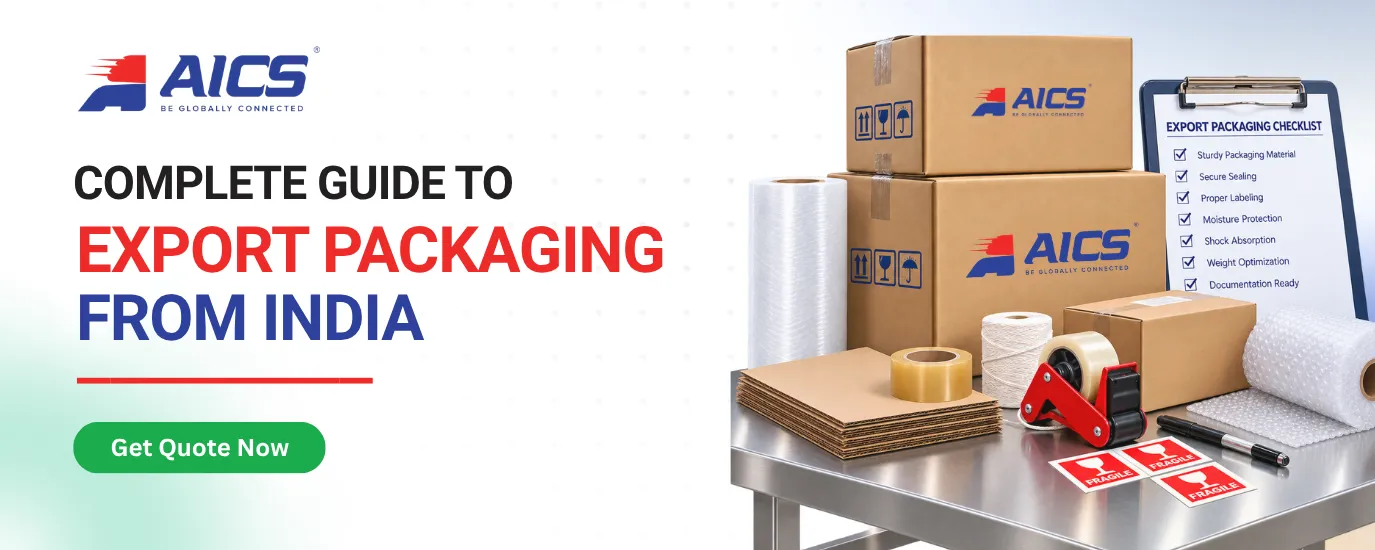
- Final packaging. Use export-ready packaging appropriate to the product. Record the final packed dimensions and weight only after the shipment is sealed.
- Customs/banking readiness. For commercial exports, confirm the exporter and banking details required for the selected courier/customs route, including the applicable AD-code/ICEGATE setup where relevant.
- Courier review. Share the complete shipment profile with the courier before assuming acceptance: product, destination, declared value, carton count, packed weight, dimensions and any special handling or regulatory characteristics.
Exporters should also prepare a packing list for export courier when package-level contents, quantities, weights and dimensions need to be recorded.
Example: A Higher-Value, Compact B2B Order
Consider an Indian manufacturer receiving an overseas order for precision components with a declared commercial value above the old ₹10 lakh threshold. The packed order is compact enough for courier handling.
Under the revised Para 9.05, the former per-consignment value ceiling is no longer the reason the exporter must reject courier mode. The next questions become more practical: Are the components freely exportable? Is the classification correct? Does the destination impose any special import condition? Are the invoice and other documents complete? Is the selected courier/service able to accept the commodity and shipment profile?
This is the real benefit of the 2026 change: it shifts the decision away from an artificial value threshold and toward the actual compliance and logistics characteristics of the shipment.
What E-commerce Sellers Should Review Before Scaling International Orders
For e-commerce sellers, higher order values can appear during seasonal sales, bundles, wholesale orders or multi-unit purchases. A seller should not wait until dispatch day to discover that a product, destination or document set needs additional review.
Build export checks into the order workflow. Capture a clear product description, destination country and postcode, quantity, invoice value, packed dimensions and weight. Maintain consistent product information across the order, invoice, shipping data and customs declaration. Flag products that may require regulatory review rather than letting every order enter the same automated shipping flow.
If the store uses Shopify or WooCommerce, shipping automation can help with rates, labels, pickup and tracking, but automation should not replace commodity-level compliance checks. The best workflow combines operational automation with a clear exception process for restricted, unusual, high-value or documentation-sensitive orders.
For e-commerce businesses, courier exports from India can provide another option for sending eligible international orders.

Does “No Value Limit” Mean Courier Is Always the Best Mode?
No. Courier can be a strong option for many compact, urgent or direct-delivery export consignments, but shipment mode should still be selected on the facts.
A heavier, palletised or high-volume commercial movement may be better suited to air freight or sea freight. A time-sensitive parcel may favour courier or air. A shipment requiring specialised handling may need a different process entirely.
The 2026 amendment removes one policy constraint; it does not remove the need to compare service suitability, transit requirements, customs handling, cost structure, cargo characteristics and destination conditions.
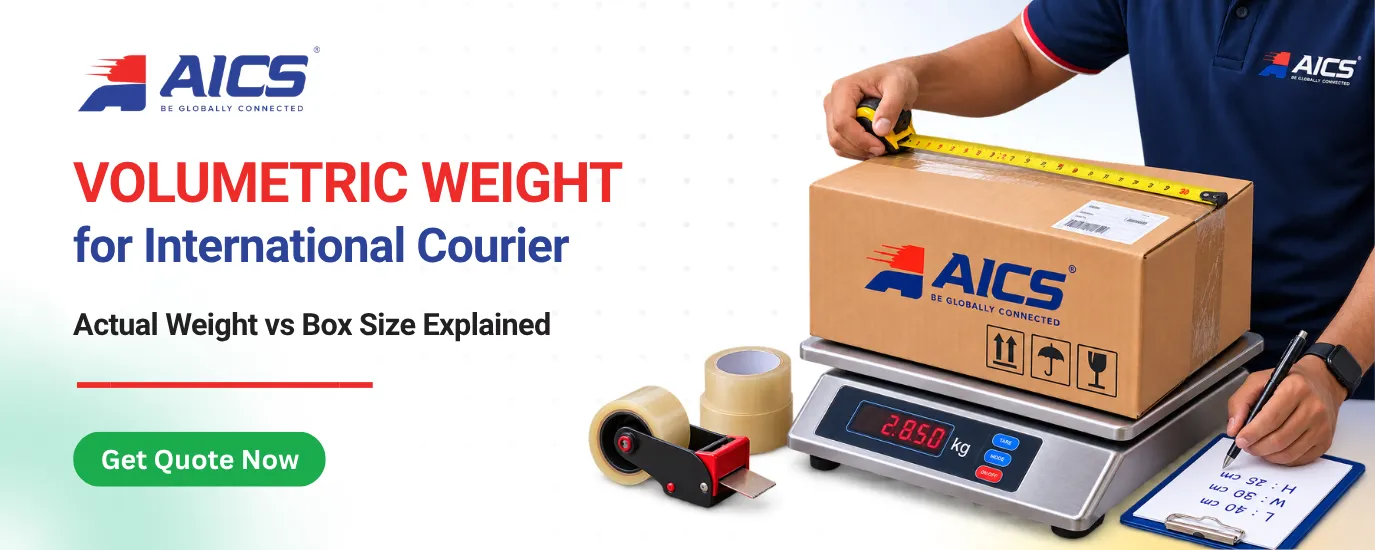
For courier shipments, final packed dimensions can also affect chargeable weight, so exporters should understand volumetric weight for international courier before comparing shipping options.
Common Mistakes After the Rule Change
The first mistake is assuming that “no value cap” means “no restrictions.” Export controls remain.
The second is quoting or booking from product weight rather than final packed weight and dimensions. Packaging can materially affect chargeable weight.
The third is using vague commercial descriptions such as “sample,” “parts” or “gift” when a more accurate product description is required.
The fourth is treating destination-country acceptance as identical to Indian exportability.
The fifth is failing to identify unusual, regulated, fragile, high-value or special-handling characteristics before the courier quote is prepared.
The sixth is relying on a social-media summary of the rule change instead of the current DGFT/CBIC framework and the actual service conditions for the shipment.
Exporter Checklist Before Requesting a Courier Quote
Please keep the following information ready:
- Exporter / Business Name & Pickup Location
- Destination Country & Postcode
- Clear Product Description
- HS / ITC (HS) Classification, where applicable
- Quantity & Declared Commercial Value
- Number of Cartons
- Final Packed Actual Weight
- Final External Dimensions of Each Carton
- Commercial Invoice & Other Applicable Shipment Documents
- Special Handling Requirements, including fragile, battery, liquid, chemical, food, medicine or regulated products
- Destination-Specific Permits or Compliance Requirements, where applicable
Providing this information early helps determine whether courier mode is suitable, calculate the shipment accurately, and identify any additional documentation, customs, or compliance checks required before dispatch.
How AICS Can Support an Export Shipment Review
For an exporter, the most useful pre-booking conversation is shipment-specific. Share the product, destination, value, carton count, final packed weight and dimensions, along with any unusual handling or compliance characteristics.
AICS can then review the shipment against the available international courier/export service options and advise on the next operational steps. Final acceptance, documentation and routing should always be confirmed for the actual commodity, destination and service being booked.
Frequently Asked Questions (FAQs)
No.
DGFT Notification No. 67/2025-26 removed the prescribed ₹10 lakh per-consignment value limit with effect from 1 April 2026.
No.
Removal of the value ceiling does not override the Foreign Trade Policy, ITC(HS), Customs Act requirements, courier regulations, destination restrictions or carrier acceptance rules.
The DGFT amendment to Para 9.05 states that there is no prescribed per-consignment value limit for exports through courier service.
Exporters should still confirm the applicable process for their specific shipment type.
ECCS is CBIC’s Express Cargo Clearance System for automated clearance of courier consignments under the electronic courier regulations.
CBIC currently lists live International Courier Terminals at:
Ahmedabad, Bengaluru, Chennai, Cochin, Delhi, Hyderabad, Jaipur, Kolkata and Mumbai.
Yes.
The policy change removes the value ceiling; it does not remove documentation, declaration, customs or product-specific requirements.
Not automatically.
The right mode depends on the shipment’s size, weight, urgency, commodity, destination, handling requirements, customs process and commercial needs.
Conclusion
The 2026 change gives exporters greater flexibility when evaluating courier exports from India, while documentation, customs and product eligibility requirements still need to be checked.
The strongest way to use that flexibility is not to treat the change as deregulation. Treat it as a wider logistics option inside the existing export framework. Confirm product eligibility, destination requirements, documentation, final packed measurements and courier acceptance before dispatch.
For a shipment-specific review, share the product description, destination, declared value, carton count, packed weight and dimensions with AICS before booking.