Introduction
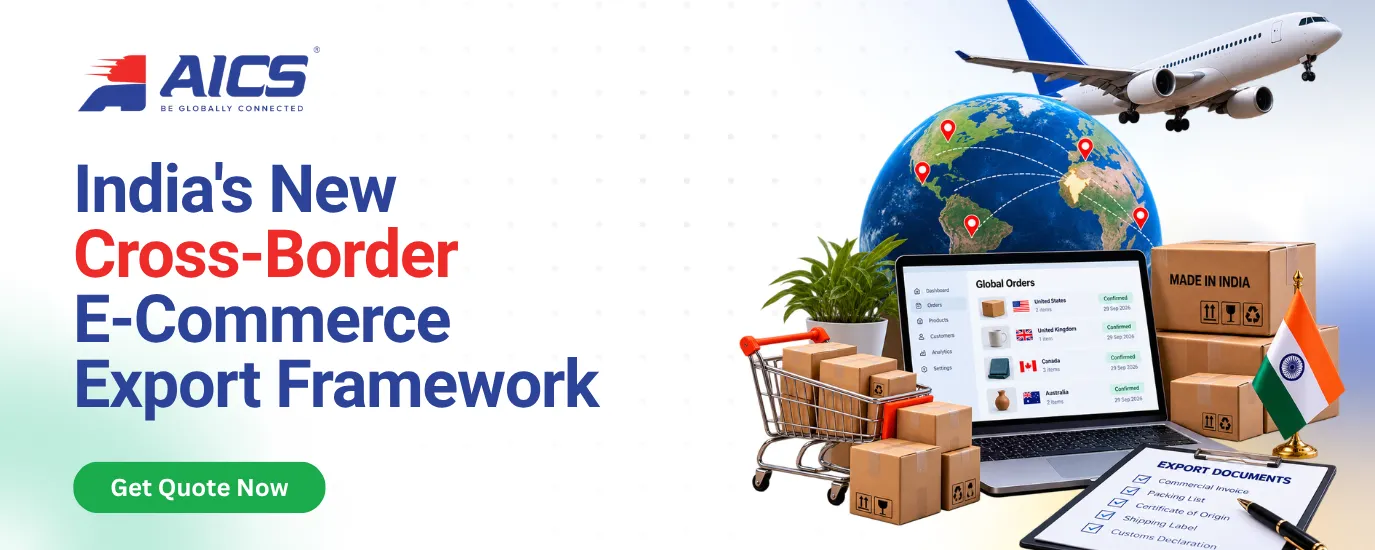
Cross-border e-commerce exports from India are becoming more structured under the new inventory-based export framework operationalised in August 2026 under the Foreign Trade Policy 2023.
The framework enables eligible Indian MSMEs, manufacturers, D2C brands, and online sellers to export products through a registered Exporter-on-Record (EOR) and Indian Sellers-on-Record (SORs).
It establishes requirements for confirmed overseas orders, Indian-origin goods, export inventory tracking, seller payments, customs compliance, and international shipping.
In this guide, learn how the cross-border e-commerce export framework works, understand the roles of EOR and SOR, and explore how international courier and export logistics support global e-commerce shipments.
Quick Answer: What Is the Cross-Border E-Commerce Export Framework?
India’s 2026 framework provides an export route for eligible businesses through a registered EOR. Goods are procured from SORs against confirmed overseas orders, with inventory traceability and applicable export compliance requirements.
Why Was the Framework Introduced?
Cross-border e-commerce gives smaller Indian businesses a way to reach overseas customers without building a traditional distributor network in every market. But international selling involves more than listing a product online. Export documentation, customs, product certification, destination-country rules, labelling, fulfilment and returns can create a heavy operational burden for a small seller.
The government’s stated objective is to make global e-commerce participation easier for Indian manufacturers, traders and MSMEs by allowing a registered EOR to handle the export-side responsibilities while maintaining transparency and safeguards for Indian sellers.
Read the Government of India’s official announcement for the policy background and framework details.
The Two Key Roles: EOR and SOR
Exporter-on-Record (EOR)
Under the framework, an Exporter-on-Record is an entity with a valid IEC and GSTIN that is registered with DGFT for the framework. It exports and sells goods procured from one or more Sellers-on-Record to buyers outside India.
The EOR is responsible for export operations and for ensuring that export inventory complies with applicable destination-country requirements, including relevant testing, inspection, certification, registration, licensing, packaging, labelling and product-presentation requirements.
Seller-on-Record (SOR)
A Seller-on-Record is an India-registered seller under the applicable GST law that supplies goods produced in India to the EOR against the EOR’s confirmed overseas export orders.
For many MSMEs, this is the commercially interesting role: the seller can focus on making or supplying the product while the registered EOR carries the formal export transaction under this framework.
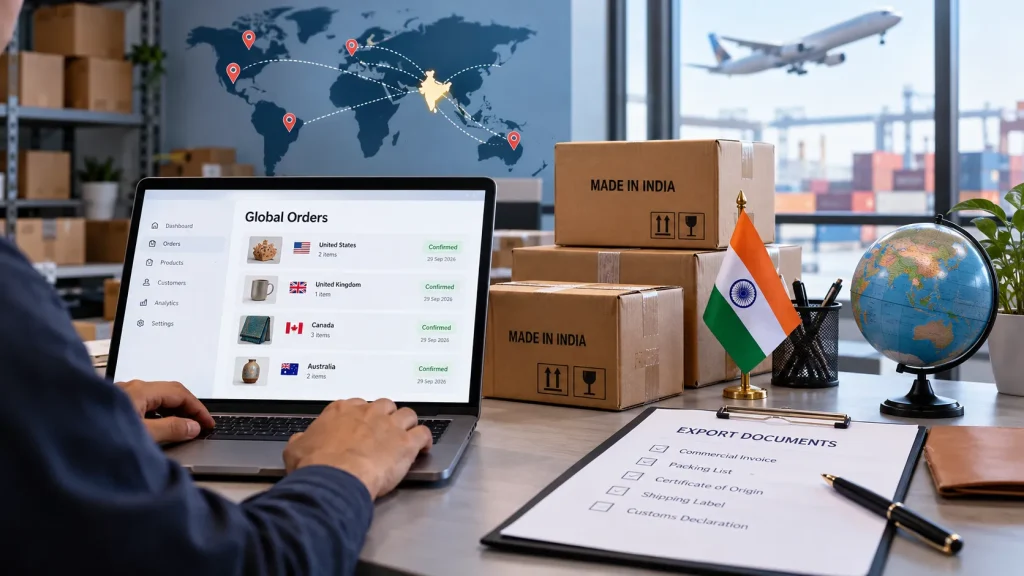
How the Model Works: From Overseas Order to Export
A practical way to understand the framework is as a controlled sequence:
An overseas buyer places a confirmed export order.
The registered EOR procures eligible India-origin goods from the SOR against that confirmed order.
The goods become export-designated inventory and must be distinctly identified, segregated and traceable.
Procurement records, GST invoices and export documentation are linked through the EOR’s digital repository.
The EOR undertakes the export in its own name and manages the required export-side compliance.
The goods move through the appropriate fulfilment, courier, cargo or other permitted logistics channel.
The seller receives the required visibility into order status, shipment tracking and final sale information under the framework.
Returns or rejected consignments are handled under the framework’s reverse-logistics rules.
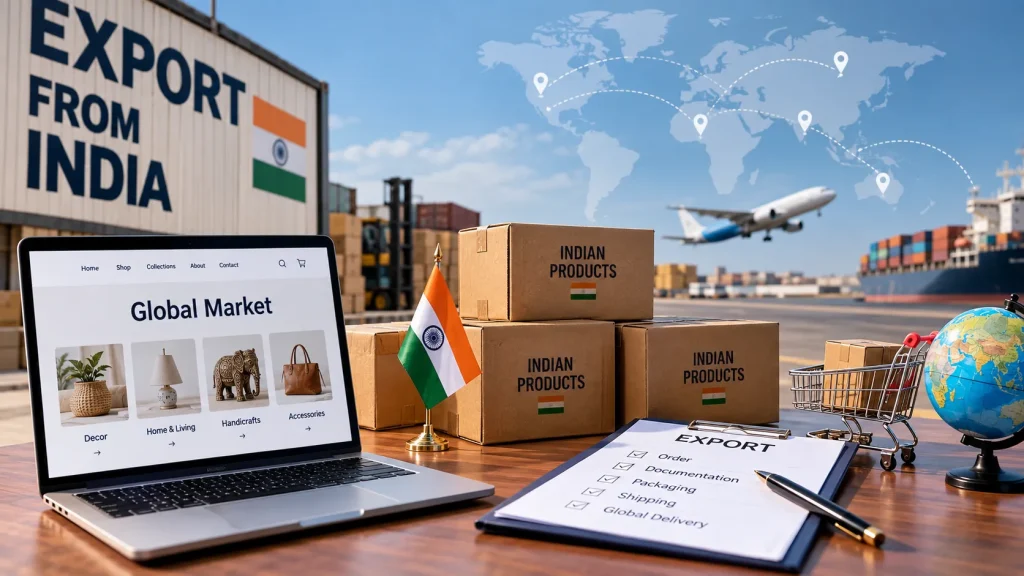
Can an EOR Build Export Inventory Before It Has an Overseas Order?
No speculative export inventory build-up is permitted under the framework. Export inventory is tied to confirmed overseas orders. The EOR may procure the goods from the SOR only against those confirmed export orders, and the export-designated stock must remain traceable.
This is an important distinction from a normal domestic inventory model. The framework is structured around export-only inventory linked to actual overseas demand.
What Goods Can Be Supplied Under the Framework?
The framework is designed around goods manufactured or produced in India. The Seller-on-Record is responsible for ensuring and declaring the correct origin of the goods. DGFT can also notify goods that are ineligible for the framework.
That does not mean every India-origin product is automatically suitable for international courier or every destination. Export policy, customs rules, product restrictions, airline or carrier acceptance and destination-country regulations still need to be checked.
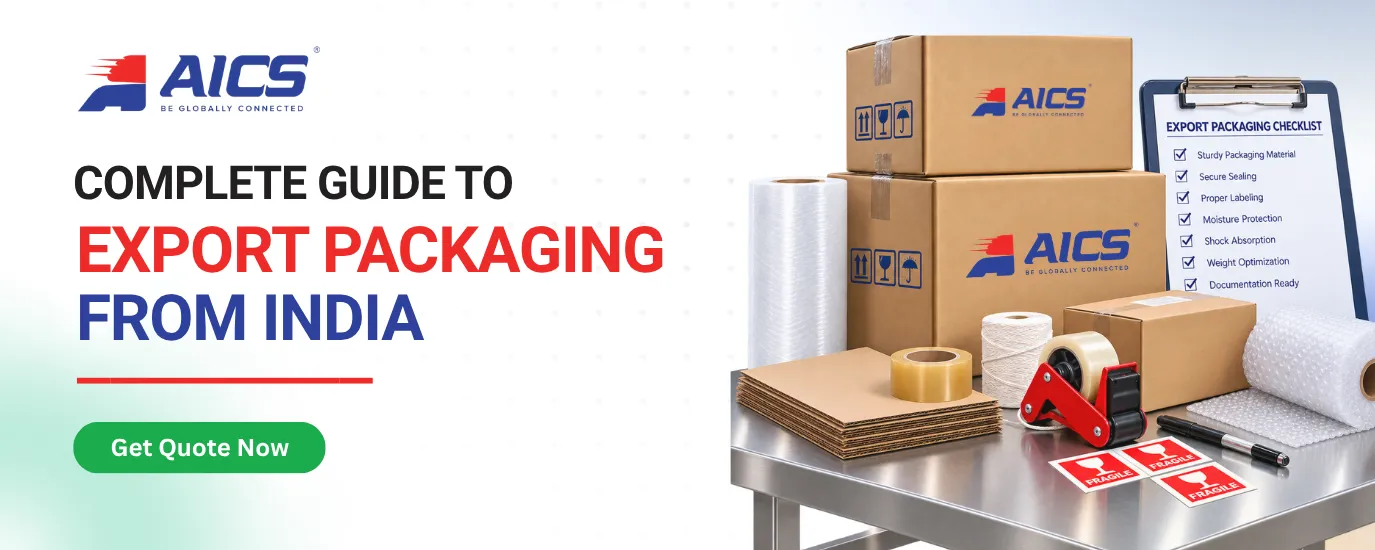
Businesses preparing export shipments can learn more about export packaging for international courier to understand packaging requirements.
Who Handles Export and Destination-Country Compliance?
A major feature of the framework is the responsibility placed on the EOR. The EOR handles the export in its own name and is responsible for ensuring that the goods held as export inventory comply with applicable destination-country laws and requirements before export.
Depending on the product and destination, that can include testing, inspection, certification, accreditation, registration, licensing, approvals, conformity assessment, packaging, labelling, markings, product information and safety warnings.
For a small seller, this can reduce the need to build every compliance capability internally. It does not remove the need to provide accurate product information to the EOR.
What Visibility Does the Indian Seller Receive?
The framework requires the EOR to provide the Seller-on-Record with access to consolidated digital records relating to that seller’s export inventory. The government’s framework includes visibility around final overseas sale price, order status, shipment tracking and destination country.
This matters because the model is intended to give the seller access to international demand without losing visibility after supplying the goods to the EOR.
How and When Is the Seller Paid?
The operational procedures require the EOR to pay the Seller-on-Record promptly after acceptance or deemed acceptance of the goods and, in any event, within the prescribed seven-day period. The seller’s payment is not meant to depend on when the overseas buyer pays the EOR.
This is a meaningful safeguard for MSMEs because it separates the seller’s domestic supply payment from the EOR’s collection risk in the overseas market.
What Happens to Export Rebates and Refunds?
The framework covers seller-attributable export benefits such as applicable cash or cash-equivalent export incentives, rebates, refunds or remissions. The EOR claims the eligible benefits and apportions the seller-attributable amount according to the FOB value attributable to each seller’s goods in the export consignment.
The notified procedures also set rules around administrative charges and the timeline for passing seller-attributable export benefits to the SOR. Businesses should verify the current procedure before relying on a particular incentive in commercial pricing.
What Happens if an Overseas Customer Returns the Product?
Reverse logistics is built into the framework. The EOR is responsible for managing returned or rejected consignments under the prescribed process.
Returned goods cannot simply be treated as ordinary domestic inventory of the EOR. Depending on the case and the applicable procedure, returned or rejected goods may need to be re-exported, returned to the seller or disposed of in an approved manner.
The agreement between EOR and SOR should clearly address cancellation, rejection, repair, re-export, destruction or disposal.
Direct Export vs Seller-on-Record: Which Route Are You Using?
The new framework should not be confused with every international e-commerce shipment from India.
If your business sells directly to an overseas customer and exports in its own name, you are following a direct-export route and must handle the registrations, declarations and compliance applicable to that transaction.
If you supply India-origin goods to a registered EOR against its confirmed overseas order under the new framework, you are participating as a Seller-on-Record and the EOR undertakes the export transaction under the framework.
Before accepting overseas orders at scale, decide which model actually applies to your business. The documentation, commercial relationship and compliance responsibility are different.
Where International Courier and Logistics Fit In
Even when an EOR handles export compliance, the physical shipment still needs the right logistics route. The choice between express courier, air cargo and other channels depends on the product, destination, shipment value, weight, dimensions, urgency, dangerous-goods status and customs requirements.
For small parcels and time-sensitive commercial shipments, international courier may be operationally suitable where the goods and destination are eligible. Larger or specialised shipments may require another route.
AICS can review shipment-level information such as destination, product description, packed weight, dimensions and declared value to help identify an appropriate international courier or logistics option. AICS should not be described as an EOR under this framework unless the company confirms that status.
Businesses exploring international shipping can learn more about AICS’s export shipment services from India and suitable logistics options.
Practical Checklist for MSMEs and D2C Brands
- Confirm whether you are exporting directly or participating through a registered EOR.
- Confirm that the goods are manufactured or produced in India where the framework requires Indian origin.
- Do not treat unsold speculative stock as export inventory under this framework.
- Make sure product descriptions, specifications and quality information supplied to the EOR are accurate.
- Ask how the EOR will provide visibility into overseas sale price, order status, destination and shipment tracking.
- Review the commercial agreement for payment timing, returns, rejection, repair, re-export and disposal.
- Understand who bears logistics and reverse-logistics costs.
- Check how eligible export rebates/refunds will be apportioned and passed through.
- Before dispatch, confirm product eligibility, destination requirements, final packed weight, dimensions and carrier acceptance.
- Keep records that connect the seller invoice, export order, inventory and shipment.
Example: An Indian D2C Brand Receives Orders from Overseas
Consider an Indian home-accessories brand that wants to sell to customers in multiple overseas markets but does not want to build its own export-compliance operation in every destination.
Under the new framework, a registered EOR may receive confirmed overseas orders and procure the brand’s India-origin goods from the brand as SOR. The EOR then exports in its own name, maintains traceable export inventory and handles the export and destination-country compliance assigned to it by the framework.
The seller still needs to supply accurate goods, origin information and commercial records. The logistics leg then moves through an appropriate courier, cargo or fulfilment route based on the actual shipment.
This model can lower operational complexity for the seller, but the commercial agreement with the EOR remains important. Payment, returns, benefits, responsibilities and data visibility should be understood before scaling.
Frequently Asked Questions (FAQs)
An EOR is a DGFT-registered entity with a valid IEC and GSTIN that procures eligible goods from Sellers-on-Record against confirmed overseas orders, exports and sells those goods to buyers outside India, and assumes the export responsibilities assigned under the framework.
An SOR is an India-registered seller under the applicable GST law that supplies goods produced in India to the EOR against confirmed export orders.
The framework does not permit speculative export inventory build-up. Procurement of export inventory is linked to confirmed overseas orders.
No. This framework is for export-only cross-border e-commerce operations. It should not be read as a general permission for domestic inventory-based e-commerce models.
Under the framework, the EOR is responsible for ensuring applicable destination-country requirements for export inventory, including relevant testing, certification, licensing, labelling and other market-access requirements.
Courier can be one logistics route where the product, destination and shipment are eligible. The framework does not make every product automatically courier-eligible; customs, carrier, airline and destination rules still apply.
No. The ₹3 lakh RCMC exemption announced in September 2026 is a separate policy change. This article covers the inventory-based cross-border e-commerce framework operationalised in August 2026.
Conclusion
India’s 2026 cross-border e-commerce framework creates a more structured path for Indian products to reach overseas buyers through registered Exporters-on-Record. For MSMEs and D2C brands, the biggest opportunity is the ability to participate in global e-commerce while an EOR handles defined export and destination-country responsibilities.
The framework is not a shortcut around export rules. It is a controlled model built around confirmed overseas orders, India-origin goods, traceable export inventory, seller visibility and defined compliance responsibility.
If you are preparing an international shipment, share the destination, product description, packed weight, dimensions and invoice value with AICS to check a suitable courier or logistics route for the shipment.