Introduction
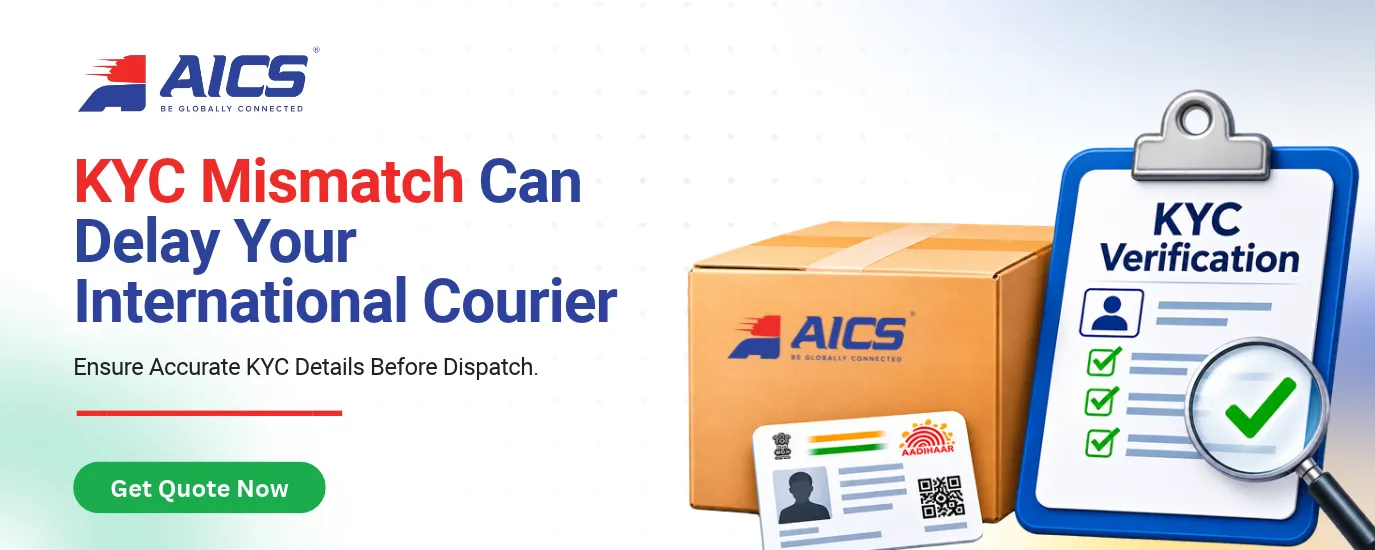
Sending an international courier from India involves more than packing your parcel and arranging a pickup. Before dispatch, the identity and address details associated with your shipment may also need to be verified.
Missing KYC information, incorrect sender details or an address mismatch can trigger additional verification and delay courier processing or customs clearance.
Whether you are sending a personal parcel, student luggage, export samples or commercial shipments, understanding the KYC documents for international courier India can help you prepare the correct information before dispatch.
In this guide, AICS Logistics explains international courier KYC requirements, common verification mistakes and what Indian senders should check before shipping.
What Is KYC in International Courier Shipping?
KYC stands for Know Your Customer. It is a verification process used to establish the identity and address of the individual or business associated with an international shipment.
For courier shipments connected with India, authorised courier service providers follow applicable compliance requirements and may collect customer information for courier declarations and customs processing.
The Central Board of Indirect Taxes and Customs (CBIC) operates the Express Cargo Clearance System (ECCS), which supports electronic courier clearance at listed International Courier Terminals.
KYC helps verify who is sending or receiving a shipment. It does not replace shipment documents such as commercial invoices, packing lists or product-specific permits.
KYC Documents Required for International Courier from India
The KYC documents required for international courier from India depend on the sender or receiver category, courier partner, shipment type and applicable verification process.
For Individual Senders
Individuals sending personal parcels or gifts abroad may need to provide identity and address information according to the selected courier’s verification requirements.
Before booking, ensure that:
- Your legal name is correct.
- Your identity information is valid.
- Your address details are complete.
- Your mobile number and email address are accurate.
For Business Senders and Exporters
Businesses sending commercial samples, products or e-commerce shipments may need to provide additional business and export-related information.
Depending on the shipment, this may include:
- Registered business or legal entity details.
- Business address.
- GST or IEC information, where applicable.
- Commercial invoice and shipment information.
Important: There is no single KYC document list applicable to every international courier shipment. Confirm the exact requirements with your selected courier before dispatch.
Common International Courier KYC Mismatch Issues
An international courier KYC mismatch occurs when the information provided during shipment booking does not correspond with the applicable verification records.
The following issues may trigger additional checks.
A. Name Mismatch
The name on the booking or Air Waybill (AWB) differs materially from the name in the KYC record.
For business shipments, the booking may use a brand name while the invoice contains a different registered legal entity name.
B. Address Mismatch
The pickup or delivery address may be incomplete or inconsistent with the applicable KYC information.
For example, the address on an identity document may be an older address while the courier pickup is requested from a current residence.
C. Incorrect Contact Details
An incorrect mobile number or email address can prevent the courier from contacting the sender or receiver for additional verification.
D. Individual vs Business Mismatch
A shipment may be booked as a personal parcel even though it is actually a business movement, or vice versa.
E. Missing Supporting Documents
KYC may be submitted successfully, but the shipment may still require a commercial invoice, product information, permits or other supporting documents.
KYC for International Courier Exports from India
When exporting an international courier from India, the authorised courier may need to verify the Indian sender or exporter and collect information required for the applicable courier declaration.
The requirements can vary depending on the shipment category.
| Shipment Type | Details to Check |
|---|---|
| Personal parcel | Sender identity and address |
| Gift shipment | Sender and receiver information |
| Student luggage | Sender details and shipment contents |
| Export samples | Business identity and commercial information |
| E-commerce orders | Seller and shipment details |
| Commercial shipments | Legal entity and applicable export information |
Before pickup, inform AICS about your sender category, destination country, parcel contents and shipment purpose. This helps identify the applicable KYC and documentation requirements.
KYC for International Shipments Arriving in India
KYC verification is also important for international courier shipments arriving in India.
The consignee or importer may need to provide identity and address information before customs clearance, depending on the courier’s verification process.
The consignee details should correspond with the information mentioned on the Express Air Waybill, where required.
For example, DHL India guidance highlights the importance of matching importer KYC details with the consignee name and address on the airway bill.
FedEx India also provides an Import Tool through which importers can submit clearance documents and check whether additional paperwork is required.
Always use the official and secure courier channel when submitting sensitive KYC information.
KYC vs Shipment Documents: What Is the Difference?
KYC and shipment documents serve different purposes during international courier processing.
| KYC Documents | Shipment Documents |
|---|---|
| Verify customer identity | Describe the goods |
| Establish identity and address | Provide shipment quantity and value |
| Relate to sender or receiver | Relate to shipment contents |
| Support customer verification | Support customs assessment |
Depending on the shipment, additional documents may include a commercial invoice, packing list, IEC/GST-related information, product declarations, licences or destination-specific approvals.
Submitting KYC does not automatically complete all customs documentation requirements.
How to Avoid KYC Delays Before International Courier Dispatch
A few checks before pickup can help reduce avoidable verification problems.
- Verify the legal name: Ensure the sender and receiver names are accurate.
- Check the address: Confirm pickup and delivery addresses, including PIN codes and postcodes.
- Verify contact details: Use a working mobile number and valid email address.
- Confirm shipment category: Clearly identify whether the shipment is personal or business-related.
- Prepare shipment documents: Keep invoices and packing information ready separately from KYC.
- Disclose address differences: Inform the courier if your KYC address differs from the pickup address.
- Confirm requirements: Ask the selected courier which documents are required before dispatch.
What to Do If Your International Courier Is Delayed Due to KYC?
If your shipment tracking shows a KYC or document-related issue, follow these steps:
Step 1: Contact the Courier
Share your Air Waybill (AWB) number and ask for the exact reason for the delay.
Step 2: Identify the Mismatch
Confirm whether the issue relates to the sender’s name, receiver’s address, contact details or business information.
Step 3: Submit the Correct Information
Provide the requested information or supporting evidence through the official courier channel.
Step 4: Confirm Submission
Ask the courier to confirm that the updated documents or information have been received.
Step 5: Follow Up
Monitor the tracking status and request an update if the issue remains unresolved.
For India-side courier clearance issues, the CBIC ECCS Trade Helpdesk advises importers and exporters to first seek resolution from the courier company. If unresolved, the applicable ECCS escalation route may be considered.
How AICS Logistics Can Help Before Booking
AICS Logistics provides international courier and shipping solutions for individuals and businesses sending shipments from India to destinations worldwide.
Before arranging pickup, share the following information with the AICS team:
- Sender type: Individual or business.
- Pickup city and address.
- Destination country.
- Exact parcel contents.
- Shipment purpose: Gift, personal parcel, sample or commercial shipment.
- Approximate shipment value.
Based on these details, AICS can help identify the applicable KYC and shipment-document requirements for the selected carrier, service and commodity.
Need help checking your KYC and shipment details before dispatch?
Contact AICS Logistics to discuss your international courier requirements.
Frequently Asked Questions (FAQs)
KYC and customer due-diligence requirements form part of India's courier compliance framework. The exact documents depend on the shipment, customer category, carrier and applicable process.
Yes. Inconsistent names, addresses or business details between KYC records and shipment booking information can trigger additional verification and delay processing.
This depends on the courier's verification process and the supporting evidence it accepts. Disclose the difference before booking and confirm which address proof is required.
No. KYC verifies the identity and address of the sender or receiver, while a commercial invoice describes the goods, declared value and commercial purpose.
Not necessarily. Business type, shipment category and courier verification requirements can change the information required.
No. Product restrictions, valuation checks, duties, licences, inspections and destination-country requirements may still apply after KYC verification.
Final Thoughts
AICS Logistics provides international courier and shipping solutions for individuals and businesses sending shipments from India to destinations worldwide.
Before arranging pickup, share the following information with the AICS team:
- Sender type: Individual or business.
- Pickup city and address.
- Destination country.
- Exact parcel contents.
- Shipment purpose: Gift, personal parcel, sample or commercial shipment.
- Approximate shipment value.
Based on these details, AICS can help identify the applicable KYC and shipment-document requirements for the selected carrier, service and commodity.
Need help checking your KYC and shipment details before dispatch?
Contact AICS Logistics to discuss your international courier requirements.