Introduction
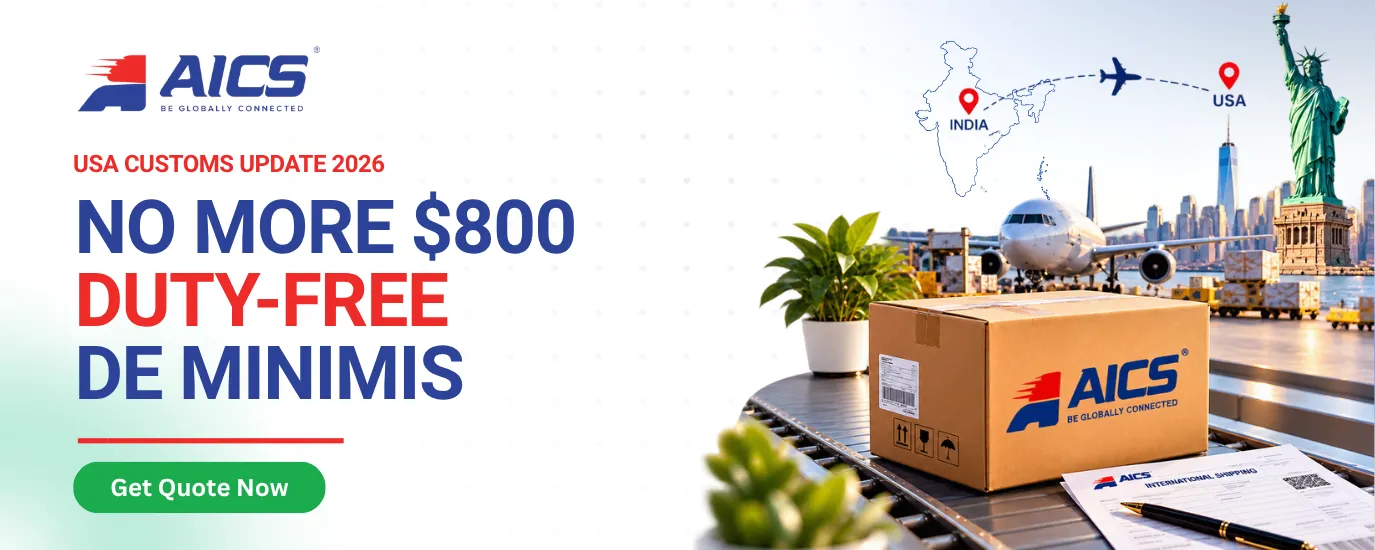
USA customs duty for courier from India depends on the product, customs classification, declared value and applicable US import rules. The former $800 de minimis exemption is no longer generally available for shipments from India, so senders should check the current customs requirements before dispatch.
The United States suspended the duty-free de minimis exemption for low-value shipments from all countries, including India, effective 29 August 2025. Executive Order 14388, issued on 20 February 2026, continued the suspension. As a result, applicable duties, taxes, fees and customs entry requirements may apply even when a parcel is valued at $50, $500 or $800.
For anyone shipping a parcel from India to the USA, a low declared value no longer guarantees duty-free entry. The applicable customs treatment depends on the product, country of origin, customs value, tariff classification and other relevant import requirements.
Quick Answer: Is a Parcel Under $800 Still Duty-Free in the USA?
Generally, no. In 2026, the former US duty-free de minimis exemption under Section 321 (19 U.S.C. § 1321(a)(2)(C)) is generally suspended for shipments from India, subject to applicable statutory exceptions.
For courier shipments outside the international postal network, the applicable customs framework requires the appropriate entry procedures and payment of relevant duties, taxes, fees and other charges. Therefore, Indian senders should not assume that a parcel will enter the USA duty-free simply because its declared value is below $800.
Before shipping, check the current requirements with U.S. Customs and Border Protection (CBP) and confirm the shipment’s documentation and customs treatment with your courier provider.
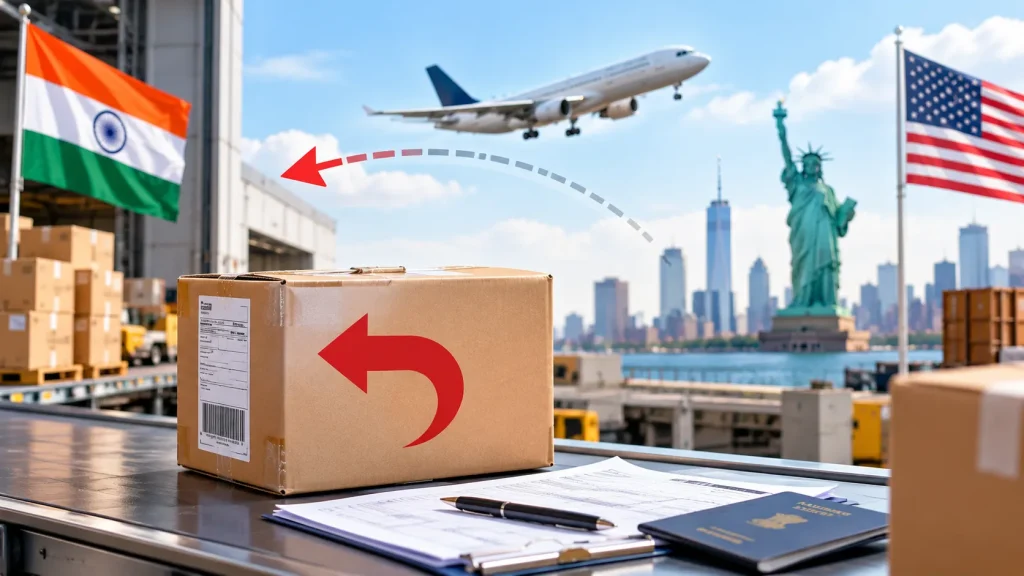
What Changed in the USA De Minimis Rule in 2026?
The United States had previously allowed many qualifying imports valued at $800 or less to enter under the de minimis provision. This threshold was particularly relevant to e-commerce sellers and individuals sending low-value parcels.
Executive Order 14324 suspended duty-free de minimis treatment for all countries, effective 29 August 2025. In February 2026, Executive Order 14388 continued the suspension and stated that the exemption would not apply to covered shipments regardless of value, country of origin, transportation mode or method of entry.
US Customs and Border Protection (CBP) also confirms that the former duty waiver for low-value shipments was suspended effective 29 August 2025.
For Indian senders, this means the previous $800 threshold should no longer be used as a general method of predicting US customs charges.
Why Indian Senders Need to Be Careful with USA Courier Advice
Some online shipping guides continue to state that personal gifts or commercial parcels valued below $800 enter the United States duty-free. Such advice may be outdated.
This can create unexpected costs for individuals, families, exporters and e-commerce businesses. A sender might quote a final price to a buyer or send a gift assuming there will be no additional customs charges. The US recipient could then face duties, fees or a customs clearance request.
Before dispatch, Indian senders should confirm the current customs treatment applicable to their shipment and communicate potential destination charges clearly to the recipient.
For shipment options, see AICS’s courier to USA from India service page.
Does the End of De Minimis Mean Every Parcel Pays the Same Duty?
No. Removing the general duty-free threshold does not establish one fixed duty rate for every product.
US customs treatment may depend on:
- The product’s tariff classification.
- The country of origin.
- The customs value.
- Applicable tariff measures.
- The type of customs entry.
- The date of entry.
- Other product-specific regulatory requirements.
Certain products may also be subject to requirements from agencies beyond CBP. Therefore, a generic statement such as “USA customs duty is X%” is not reliable for every shipment from India to the United States.
How Is USA Customs Duty Determined?
A proper customs assessment starts with accurate shipment information. The following details are generally important:
Specific product description: Describe the actual item rather than using vague terms such as “sample,” “gift” or “parts.”
Country of origin: Identify where the goods were manufactured or produced.
Customs value: Declare the value according to the applicable valuation rules and support it with the invoice or declaration.
Tariff classification: Identify the appropriate Harmonized Tariff Schedule of the United States (HTSUS) classification.
Quantity and unit details: Provide accurate quantities and relevant unit information.
Product-specific requirements: Check the intended use and any applicable regulatory requirements.
Applicable trade measures: Consider additional tariffs or trade measures in force on the date of entry.
Accurate documentation helps support the customs assessment and reduces the risk of avoidable clearance problems.
For documentation guidance, read AICS’s documents required for international courier from India guide.
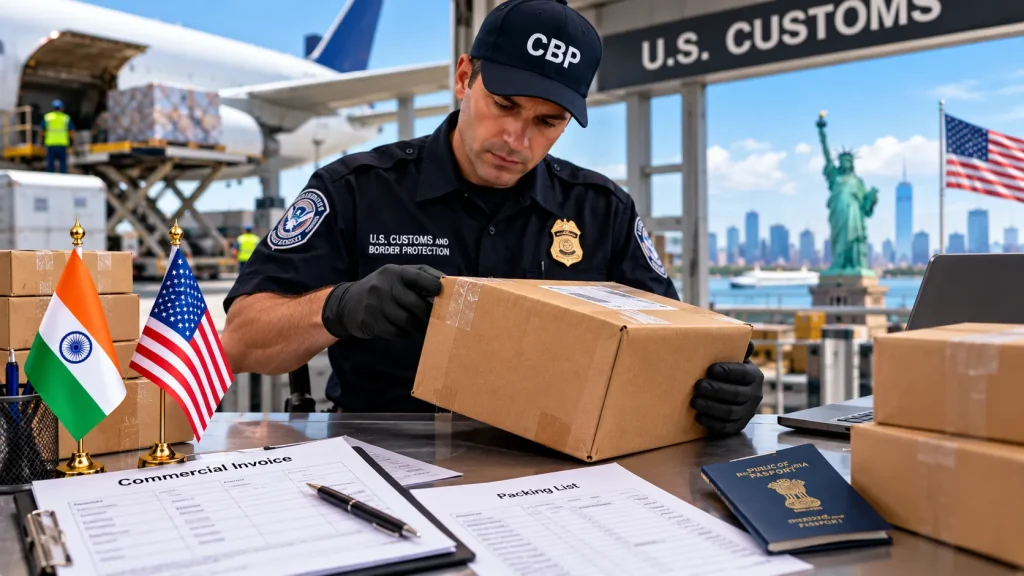
Who Pays USA Customs Duty: Sender or Receiver?
Declaring a parcel as a gift does not automatically restore the former $800 de minimis exemption. The customs treatment depends on the legal provisions applicable to the shipment.
A genuine personal gift should be described and valued accurately. A commercial sale must not be declared as a gift to avoid customs charges. Misdescription or undervaluation can create customs clearance problems and compliance risks.
Senders should confirm the applicable requirements before dispatch rather than assuming that personal parcels are automatically exempt.
What About Gifts and Personal Parcels?
Responsibility for customs charges depends on the shipping arrangement and the service selected. In many courier transactions, the receiver may be asked to pay import duties and taxes before or at delivery. Some services allow the sender or seller to arrange payment of applicable import charges.
For e-commerce businesses, this decision affects checkout pricing, customer experience, refused deliveries and returns.
Before dispatch, clearly communicate who is expected to bear destination charges. Do not promise a Delivered Duty Paid (DDP) or Delivered at Place (DAP) arrangement unless the selected courier service actually supports that arrangement for the shipment.
If you are comparing shipment costs, consult AICS’s international courier charges from India guide. Courier charges and destination customs charges are separate costs.
What About Commercial Samples Sent to the USA?
A commercial sample is not automatically duty-free simply because the sender does not expect retail payment. Its description, value, intended use, tariff classification and applicable customs rules still matter.
For B2B sample shipments, exporters should provide a clear product description and a defensible customs value. If a sample has been permanently altered or may qualify for a specific customs treatment, the relevant rule should be confirmed instead of assuming that every sample is exempt.
For invoice preparation guidance, read AICS’s commercial invoice for export courier guide.
Does Low Value Remove FDA, USDA or Other US Agency Requirements?
No. Customs value and product admissibility are separate questions.
Food, medicines, supplements, cosmetics, plant or animal products, medical devices, electronics and other regulated categories may trigger requirements from US agencies in addition to CBP.
A low-value parcel is not automatically exempt from product-specific regulations. This is particularly important for Indian senders shipping homemade food, medicines, Ayurvedic products, supplements or commercial consumer goods to the United States.
Before sending any potentially regulated product, check the applicable requirements and AICS’s restricted items for international courier guidance.
Practical Example: A ₹20,000 D2C Order to the USA
Suppose an Indian direct-to-consumer (D2C) brand receives an online order from a customer in New Jersey. The goods have a genuine transaction value of ₹20,000.
Under the old assumption, the seller might convert the amount into US dollars, see that it is below $800 and expect the parcel to enter duty-free.
That assumption is no longer safe. The seller should instead:
- Provide an accurate invoice and product description.
- Confirm the country of origin and relevant tariff classification.
- Check the selected courier’s US customs clearance process.
- Decide how potential duties and fees will be handled with the buyer.
- Communicate the destination-charge policy before dispatch.
The key change is not that every parcel automatically attracts one fixed duty percentage. It is that a value below $800 is no longer a general guarantee of duty-free entry.
Pre-Dispatch USA Customs Checklist for Indian Senders
Before sending a parcel from India to the USA, review the following checklist:
- Use a specific and truthful product description.
- Declare the genuine shipment or customs value.
- Confirm the country of origin.
- Provide the correct invoice for a commercial shipment.
- Check the likely tariff classification for business or export shipments.
- Confirm whether FDA, USDA, CPSC, FCC or another US agency has applicable requirements.
- Check whether the receiver may be charged duties, taxes, brokerage or other fees.
- Verify the receiver’s name, phone number, email address and delivery address.
- For e-commerce orders, communicate the destination-charge policy before checkout or dispatch.
- Ask the courier or logistics team about the current US customs entry process for the actual shipment.
Following these checks helps senders set realistic expectations and reduce avoidable documentation or clearance issues.
How AICS Can Help with USA Courier Shipments in 2026
When requesting a courier quote for the USA, separate the origin shipping charges from destination customs charges. The courier price and US import duty are not the same thing.
AICS can review the destination, product, packed weight, dimensions, invoice value and shipment type to recommend a suitable courier option. Where customs treatment is uncertain, duties and fees should be treated as shipment-specific rather than promising that a parcel is duty-free because its value is below $800.
This approach helps Indian senders, exporters and D2C brands communicate more clearly with US recipients and reduce the likelihood of unexpected payment requests after a parcel reaches the United States.
To discuss your shipment, contact AICS with the product details, destination ZIP code, invoice value, packed weight and dimensions.
Frequently Asked Questions (FAQs)
No, not as the former general duty-free exemption. Duty-free de minimis treatment was suspended for shipments from all countries effective 29 August 2025, and the suspension continued in February 2026.
The former $800 automatic duty-free threshold is no longer generally available. However, the exact duty, tax and fee outcome depends on the goods and applicable US customs rules. There is no single universal rate for every parcel.
No. Commercial sales should be declared accurately. A false gift declaration or undervaluation can create customs and compliance problems.
It depends on the shipping arrangement and service selected. The receiver often pays under recipient-paid arrangements, while some services allow the sender to arrange payment of applicable duties and charges. Confirm the arrangement before dispatch.
No. Product admissibility and agency requirements are separate from shipment value. FDA, USDA and other applicable rules may still apply.
Some pages may not have been updated to reflect the suspension of duty-free de minimis treatment. For current customs requirements, rely on US government guidance and shipment-specific advice.
AICS can review shipment information and the courier route. However, the exact customs treatment depends on the product, classification, origin, value, entry date and US customs assessment. A fixed duty amount should not be promised without an appropriate basis.
Conclusion
For courier shipments from India to the USA in 2026, the old assumption that “under $800 means duty-free” should no longer be used as general advice.
Indian senders should prepare accurate invoices and product information, check destination-specific regulatory requirements and decide who will handle potential US duties and fees before dispatch.
Sending a parcel to the USA? Share the product description, destination ZIP code, invoice value, packed weight and dimensions with AICS for a current courier quote and shipment review.